
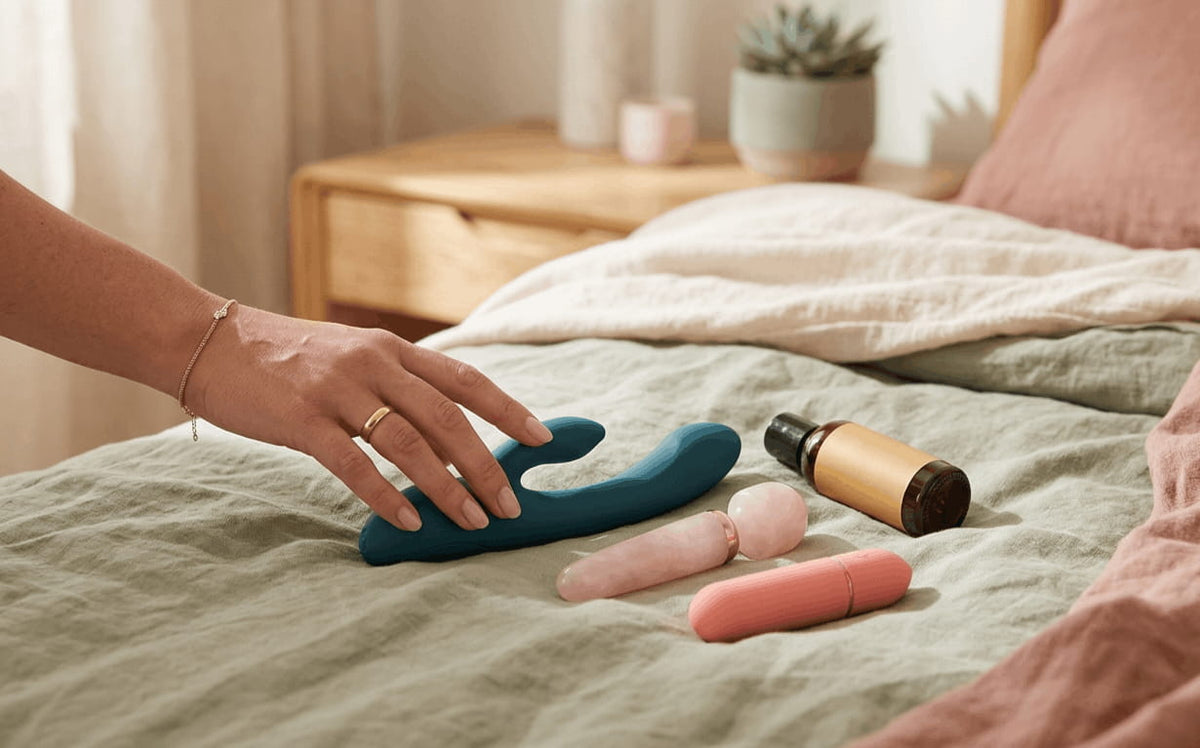
There's no single reason people bring toys into the bedroom, or their own private time for that matter. Some are chasing an orgasm that's proven elusive on its own. Others want to add variety to a sex life that's gone a bit flat, or they're curious about sensations they haven't tried. Couples often use sex toys to close the gap when one partner finishes more easily than the other, and plenty of people simply enjoy exploring their own body without any pressure to perform for someone else. None of these reasons need justifying. Wanting more pleasure is reason enough.
How to Use a Sex Toy - Step by Step
1. Set the scene
This part gets skipped more than it should. Give yourself proper time rather than squeezing it in between other things, since feeling rushed makes it much harder to relax into the experience. Dim the lights if that helps, put your phone somewhere you won't hear it buzz, and treat the first few minutes as a warm up rather than the main event. If you're using something with a charging cable or settings you haven't tried, get familiar with the buttons beforehand so you're not fumbling around once things get going.
2. Start low, especially with vibration
If your toy has multiple settings, always begin on the lowest one, even if you assume you'll want more. Vibration in particular tends to be far stronger than people expect, and starting on a high setting can numb the area or just feel unpleasant rather than exciting. Give your body a minute or two on the lowest setting before deciding whether to increase it. There's no rush, and easing up slowly tends to build sensation rather than short circuit it.
3. Ease in and adjust as you go
Once you're comfortable with the intensity, start experimenting with placement. Small shifts matter more than people think. Moving a vibrator half an inch, changing the angle of a dildo, or switching from steady pressure to a slower circling motion can completely change how something feels. Pay attention to what makes your breathing change or what makes you want more, and follow that rather than sticking to one spot out of habit. What worked last time might not be the right approach today, and that's normal rather than a sign you're doing something wrong.
4. Communicate if you're with a partner
Have a quick conversation before you start, even if it feels a little awkward at first. Mention what you're curious to try and anything that's off the table. Once you're using the toy together, keep checking in with short, simple feedback rather than staying quiet and hoping the other person figures it out. Something like "a bit slower" or "right there" takes the guesswork out of it and tends to lead to a much better experience for both people. If it's the toy's first outing, treat it as a trial run. It's fine if the first attempt is more about learning what works than getting everything right straight away.
5. Listen to your body over the toy
Sensation should build gradually rather than tip into discomfort. If something starts to feel more irritating than pleasurable, whether that's from too much pressure, not enough lube, or a setting that's too intense, stop and adjust rather than pushing through it. Toys are there to add to the experience, not something you need to tolerate to get a result. Slowing down or pausing altogether is always an option, and it often makes the rest of the session better rather than ruining it.
Cleaning and Storing Your Toys
Silicone
Wash with warm water and a mild, unscented soap after every use. Many silicone toys that aren't electronic can also be boiled for five to ten minutes for a full disinfect, which is worth doing every so often even if you clean regularly.
Glass and stainless steel
The easiest materials to keep clean. Both handle warm soapy water well, and many can go through a dishwasher cycle, though it's worth double checking the toy has no electronic parts before doing this.
Hard plastic
Stick to soap and water only. High heat can warp or damage plastic, so boiling or dishwashing is best avoided altogether.
Storage
Let toys dry fully before putting them away. Storing anything while still damp encourages bacteria, which undoes the point of cleaning it in the first place. A breathable pouch or a dedicated box works better than tossing toys loose into a drawer together, especially since some materials can react badly to touching each other over time.
When to replace
Check toys occasionally for cracks, tears, or a sticky texture on the surface. Any of these mean it's time to replace the toy, since damaged material is much harder to clean properly and can hold onto bacteria no matter how carefully you wash it.
Common Mistakes Beginners Make
Going too big or too intense too soon
It's tempting to buy something impressive looking, but starting smaller and working up tends to lead to a better experience overall.
Skipping the battery or charge check
Few things kill momentum quite like a toy dying halfway through.
Using a toy straight out of the box without cleaning it first
Packaging isn't sterile, so a quick wash before that first use is worth the extra minute.
Giving up too quickly
Like most things involving your body, toys often take a bit of trial and error to figure out what actually works for you. A lukewarm first try isn't a sign to abandon it.
Sex Toy Safety and Hygiene Basics
Stick to body safe materials
Silicone, glass, stainless steel, and hard plastic are non-porous and far less likely to harbour bacteria than cheaper, softer materials.
Take extra care when sharing toys
Using a condom over a shared toy and swapping it out between uses, or between partners, helps lower the risk of spreading infection. Wash thoroughly before and after each use regardless.
Know when to get it checked
Ongoing irritation, unusual discharge, or discomfort that doesn't settle after use is worth mentioning to a doctor rather than assuming it will pass on its own.
FAQ
Are sex toys safe to use every day?
Generally yes, as long as the toy is body safe, cleaned properly between uses, and not causing any irritation.
Can sex toys reduce sensitivity over time?
Occasional desensitisation can happen with very frequent, intense use, but it typically isn't permanent and eases off with a short break.
What's the difference between a vibrator and a dildo?
Vibrators use motion or vibration for stimulation, while dildos are designed for penetration without any moving parts.
Do I need lube with every toy?
Most toys feel better with lube, particularly for penetration, though external vibrators can be used without it depending on preference.
How do I clean a toy that isn't waterproof?
Wipe it down with a damp cloth and mild soap, avoiding the battery compartment or any electronic components, then dry it fully before storing.
Share:
Dildo vs Vibrator - Which One Should You Choose?
Butt Plug vs Dildo: Which One's Right for You?